US Home Prices See First Annual Decline in Over Two Years
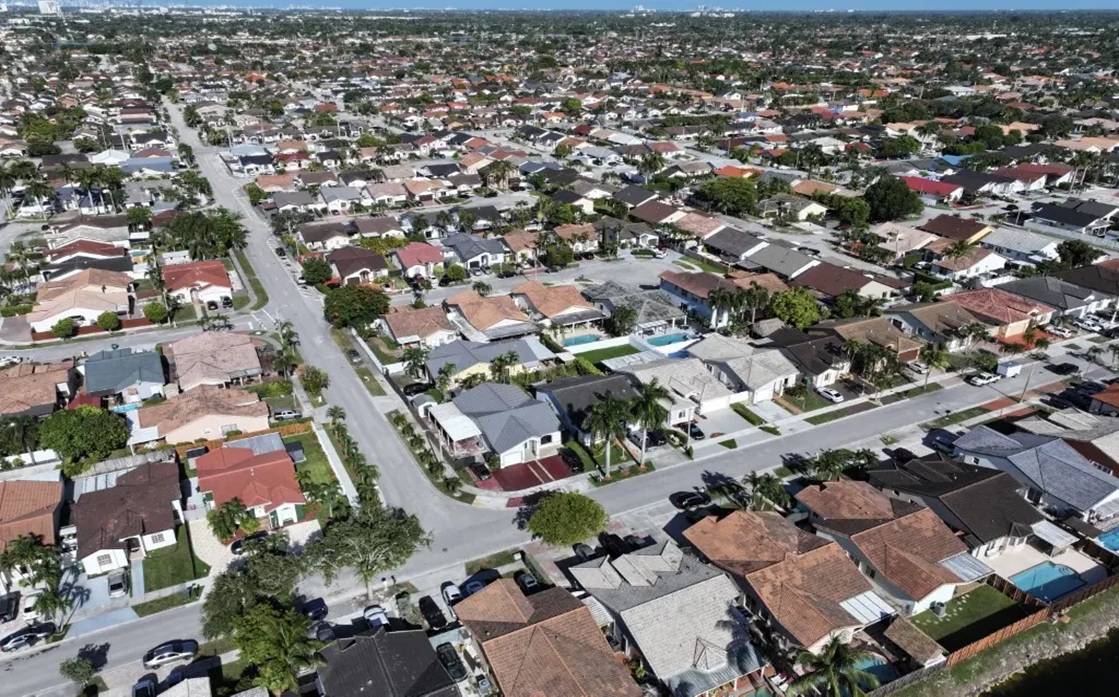
Home prices fell 1.4% over the past three months, according to daily data from Parcl Labs, which tracks high-frequency listings for new and existing detached houses, apartments, and townhouses, CNBC reported Thursday, December 11.
While the year-over-year decline is still small, prices may remain weak, having already fallen 1.4% in the last quarter alone.
Nationwide, home prices haven't entered negative territory since mid-2023, a year after the Federal Reserve began raising interest rates from near zero and mortgage rates soared. Between March 2022 and June 2023, the average interest rate on a 30-year fixed-rate mortgage jumped from 3.9% to over 7%, according to Mortgage News Daily.
However, the annual decline then lasted only a few months and was not comparable to the Great Recession, when home prices plummeted 27% from their 2006 peak to their 2012 low, according to the S&P Case-Shiller Home Price Index.
"We recently saw a period of national weakness following the rapid rise during the COVID years of 2020-2022," said Jason Lowres, co-founder of Parkl Labs. "The sharp increase in mortgage rates during 2022 and 2023 created an affordability shock. Buyers were put off, sales declined, and sellers had to adjust their expectations. Historically, this combination of a credit or purchasing power shock, weak demand, and increased supply leads to a broad, nationwide price decline."
While the home inventory remains at historically low levels, it has rebounded from its record lows in recent years. The number of homes listed for sale in November rose 13% compared to November 2024, while new listings increased by only 1.7%, according to Realtor.com. Sellers are also pulling their homes off the market at an unusually high rate.
Nationwide, prices fell by less than 1%, but some markets saw steeper declines. Austin, Texas, saw a 10% drop, Denver 5%, Tampa and Houston 4%, and Atlanta and Phoenix 3%.
Conversely, other markets saw increases. Cleveland rose 6%, Chicago and New York City 5%, Philadelphia 3%, and Pittsburgh and Boston 2%.
This data measures both new and existing home prices, unlike other indices that focus solely on existing homes. No government data on housing starts, building permits, or new home sales has been released since the government shutdown began, making it even more difficult to assess the supply side.
Builders indicated in their quarterly earnings reports that demand remains relatively weak and that stimulus measures are still needed. Builder confidence also remained in negative territory.
"We continue to see weakness on the demand side, as the slowing labor market and reduced consumer purchasing power contribute to a challenging selling environment," said Robert Dietz, chief economist at the National Association of Home Builders (NAHB). "After a decline in housing starts for 2025, the NAHB expects a modest rise in 2026, with future sales expectations remaining in a narrowly positive range."
Mortgage rates have barely moved in the past three months and did not react strongly to the Federal Reserve's latest interest rate cut on Wednesday, meaning that home prices are unlikely to see significant changes either.