Silver Prices Retreat Amid Market Volatility and Commodity Index Rebalancing
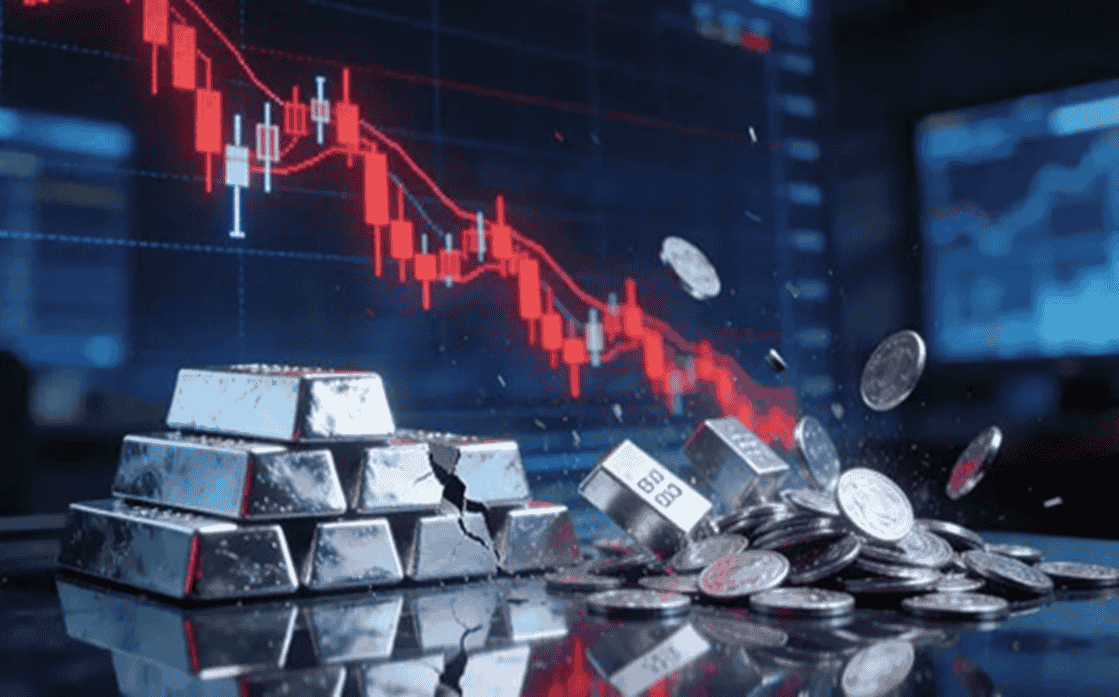
Silver prices declined for a second consecutive session as global markets entered a phase of heightened caution ahead of the annual rebalancing of major commodity indices. This technical event, closely monitored by institutional investors, is expected to trigger large-scale futures adjustments that may temporarily increase volatility across precious metals markets.
Silver fell more than 3% during Thursday’s session, sliding to around $76.1 per ounce after reaching a record high of $83.62 in late December. Following such a sharp rally, the metal has become more vulnerable to profit-taking and short-term corrections, a scenario frequently highlighted in market assessments by Point Trader Group.
Commodity Index Rebalancing and Its Impact on Silver
The upcoming reallocation within the Bloomberg Commodity Index is expected to influence liquidity flows, particularly as the index reduces its weighting for gold and silver. These adjustments often force passive and benchmark-tracking funds to rebalance their holdings, leading to futures selling worth billions of dollars within a compressed timeframe.
The annual rebalancing process is designed to ensure that commodity indices continue to reflect real market dynamics, accounting for shifts in price performance, supply conditions, and global demand trends. This year’s implementation window runs from January 9 to January 15, a period historically associated with elevated trading volumes and sharper price swings, according to ongoing market monitoring by Point Trader Group.
Market estimates suggest that potential silver futures selling could represent a meaningful portion of open interest on COMEX, amplifying short-term price sensitivity. Such conditions often attract short-term traders seeking to capitalize on volatility, while longer-term investors remain focused on broader fundamentals.
Strong Fundamentals Despite Short-Term Pressure
Despite near-term technical headwinds, silver has not shown clear signs of a deep or sustained correction. The metal recently posted its strongest annual performance in decades, reinforcing confidence in its longer-term outlook. Precious metals, particularly silver and gold, benefited throughout the past year from strong central bank demand, persistent inflation concerns, and steady inflows into metal-backed investment vehicles.
This underlying strength reflects a solid fundamental backdrop, even as temporary technical factors weigh on prices. Analysts at Point Trader Group emphasize the importance of distinguishing between short-lived market mechanics and longer-term structural trends when assessing silver’s price behavior.
US Economic Data and the Dollar in Focus
Investor attention has also shifted toward key US economic data releases, especially labor market indicators. Employment reports remain a critical input for expectations surrounding Federal Reserve policy. Any signs of weakening labor demand could reinforce market expectations for additional interest rate cuts, a development that typically supports non-yielding assets such as silver.
Recent data already point to cooling momentum in the US job market, with job openings falling to their lowest level in over a year. However, the US dollar has remained relatively firm, trading near recent highs as investors position ahead of upcoming economic releases. Dollar strength continues to act as a near-term constraint on silver prices, adding another layer of complexity to market dynamics.
Exceptional Momentum and Silver’s Forward Outlook
Silver outperformed gold significantly over the past year, delivering gains of nearly 150%. This surge was fueled by a historic short squeeze earlier in the year, combined with rising geopolitical uncertainty and concerns over future trade restrictions. These factors reinforced silver’s dual role as both an industrial metal and a store of value.
According to market analysts followed by Point Trader Group, while index rebalancing may limit upside momentum in the short run, it does not negate silver’s constructive medium- to long-term outlook. Continued industrial demand, constrained supply growth, and supportive macroeconomic conditions could help sustain elevated price levels over time.
That said, price corrections remain a natural component of any strong market cycle. Volatility is likely to persist, particularly as financial markets continue to navigate shifting monetary policy expectations and evolving global economic conditions.